Why visit
Why visit Aqueduct of Vanvitelli
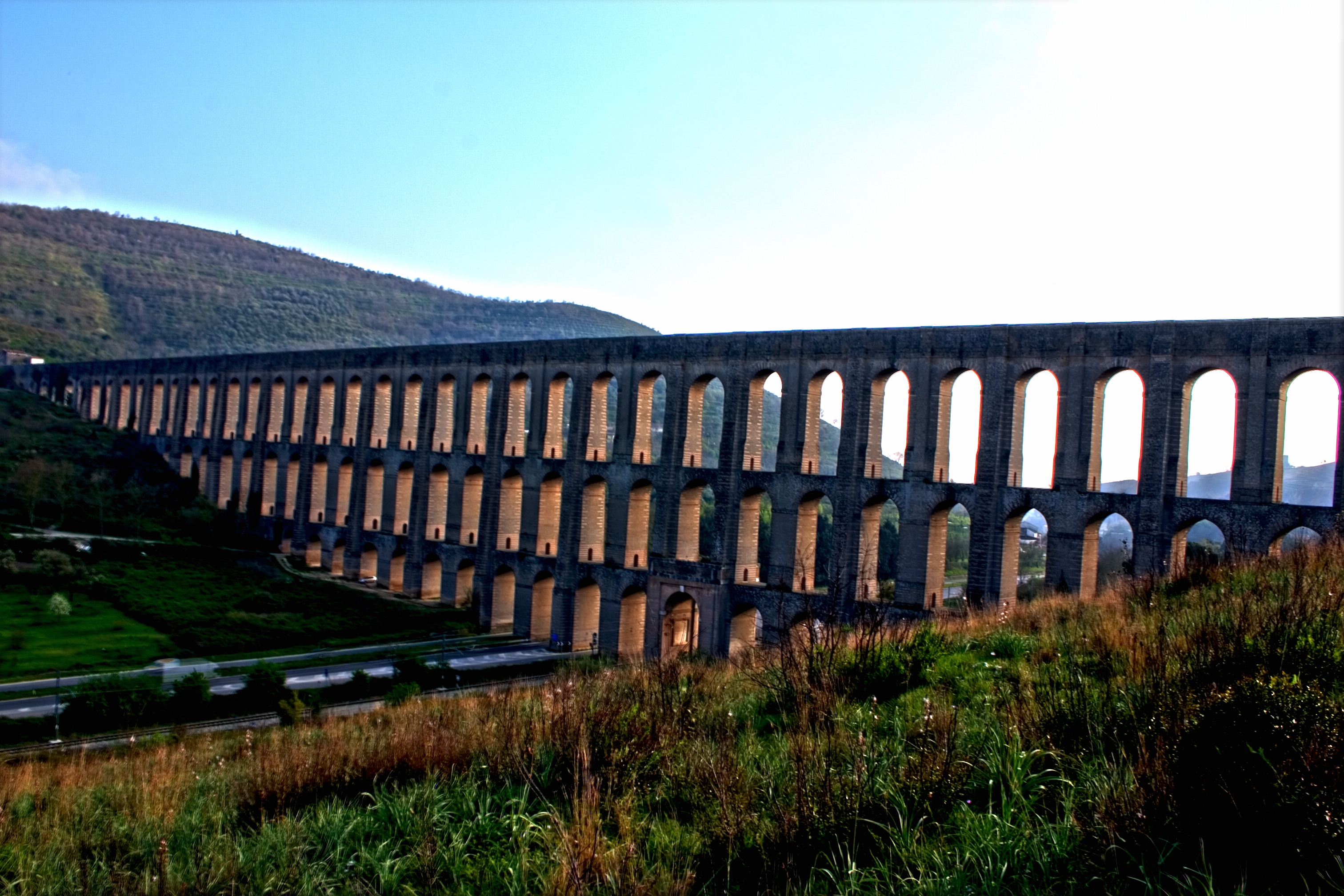
The Aqueduct of Vanvitelli or Caroline Aqueduct is a 38-kilometre (24 mi) aqueduct that supplied water to the Reggia di Caserta and the San Leucio complex from the foot of the Taburno massif and springs of the Fizzo Contrada, in the territory of Bucciano. Mostly underground, the aqueduct is noted for its well-preserved
At a glance
Where
Caserta, Italy
Category
Archaeological
History
The Aqueduct of Vanvitelli or Caroline Aqueduct is a 38-kilometre (24 mi) aqueduct that supplied water to the Reggia di Caserta and the San Leucio complex from the foot of the Taburno massif and springs of the Fizzo Contrada, in the territory of Bucciano. Mostly underground, the aqueduct is noted for its well-preserved, three-tier, 529-metre-long (1,736 ft) tufa-arched section bridging the Valle di Maddaloni between Monte Longano (to the east) and Monte Garzano (to the west). This section was modelled after Roman arched aqueducts, is 55.8 metres (183 ft) high at its highest point, crosses what is now highway SP335 — and was designated a World Heritage Site in 1997. Commissioned by Charles of Bourbon, the aqueduct was designed by and named after Luigi Vanvitelli. Construction began in March 1753 and it opened on 7 May 1762. It is located in SS265, 81020 Valle di Maddaloni CE, Italy.
“The Aqueduct of Vanvitelli or Caroline Aqueduct is a 38-kilometre (24 mi) aqueduct that supplied water to the Reggia di Caserta and the San Leucio complex from the foot of the Taburno massif and springs of the Fizzo Contrada, in the territory of Bucciano. Mostly underground, the aqueduct is noted for its well-preserved”
Live from here
Gallery
Nearby attractions
No other landmarks within a short walk from here.
Nearby restaurants, cafés & bars
Community reviews
On the map