Why visit
Why visit Canton of Lugano
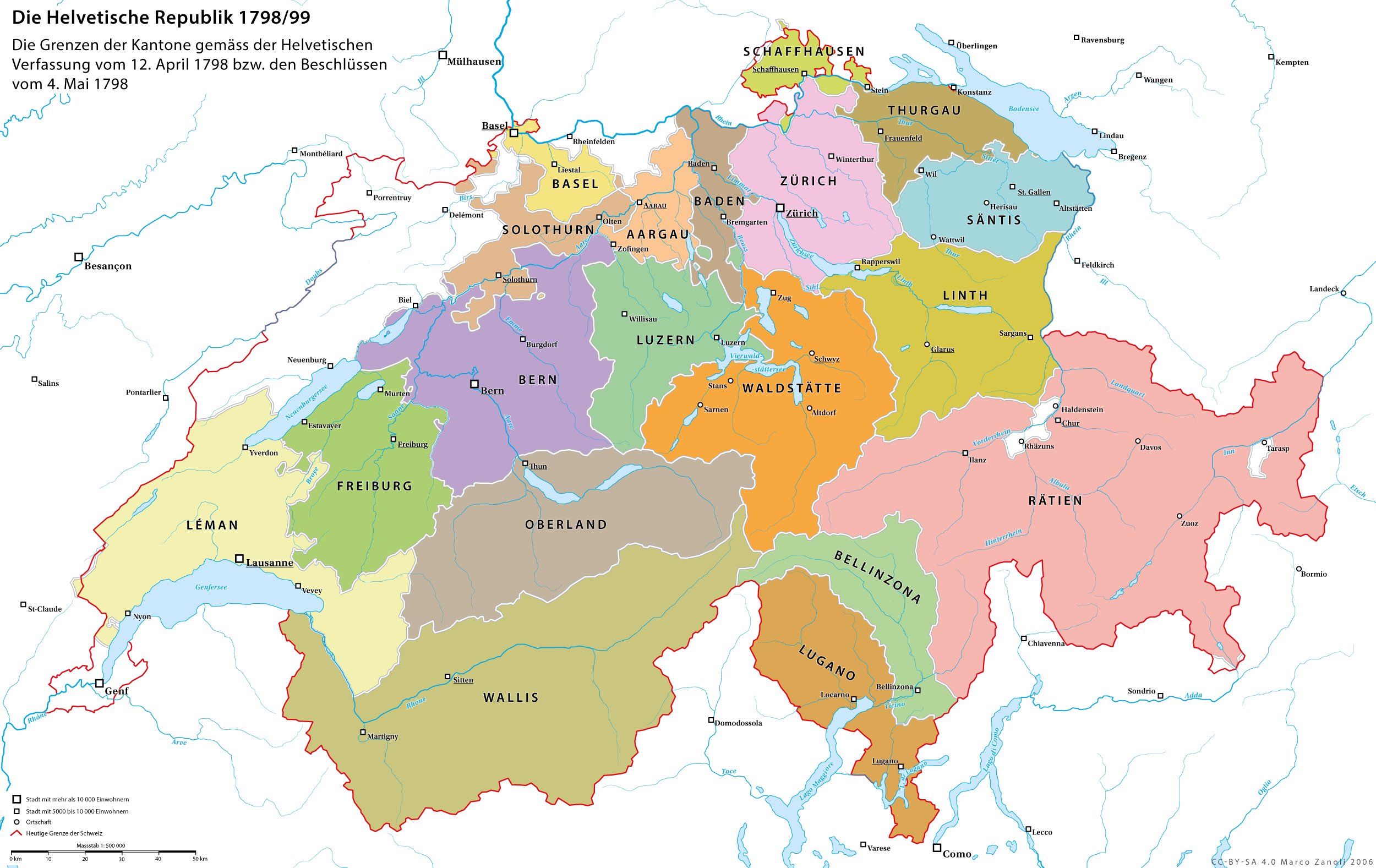
Lugano was the name of a canton of the Helvetic Republic from 1798 to 1803, with its capital at Lugano. The canton unified the former Landvogteien of Lugano, Mendrisio, Locarno and Valmaggia.
At a glance
Where
Lugano, Switzerland
Category
Historic Site
History
Lugano was the name of a canton of the Helvetic Republic from 1798 to 1803, with its capital at Lugano. The canton unified the former Landvogteien of Lugano, Mendrisio, Locarno and Valmaggia. As with the other cantons of the Helvetic Republic, the autonomy of Lugano was very limited, the republic having been founded by Napoleon in order to further centralise power in Switzerland. The canton was led by a Directory of five members, who appointed a "national préfet", the first of whom was Giacomo Buonvicini. The canton was riven with dispute between "patriots", supporting the Cisalpine Republic, and traditionalist "aristocrats". The politics of the central government — the seizure of church property, the introduction of direct taxation, mandatory military service, an amnesty favouring Cisalpine patriots and a law regarding municipalities that rejected the secular tradition of communal autonomy — as well as the military occupation by the French Revolutionary Armies, with its associated violence and requisitions, all combined to maintain a level of hostility to the new régime within the local population, which eventually rose up against the régime. In Lugano, during anti-French protests of 28 and 29 April 1799, the printer Agnelli's was looted and the abbot Giuseppe Lodovico Maria Vanelli and other Cisalpine patriots were killed; the préfet Francesco Capra, who succeeded Buonvicini
“Lugano was the name of a canton of the Helvetic Republic from 1798 to 1803, with its capital at Lugano. The canton unified the former Landvogteien of Lugano, Mendrisio, Locarno and Valmaggia.”
Live from here
Gallery
Nearby attractions
Nearby restaurants, cafés & bars
Community reviews
On the map