Why visit
Why visit Rhine Gorge
Upper Middle Rhine Valley is the 65 km (40 mi) southern section of the Middle Rhine between Koblenz and Rüdesheim in the states of Rhineland-Palatinate and Hesse in Germany. It was added to the UNESCO list of World Heritage Sites in June 2002 because of its beauty as a cultural landscape, its importance as a route of t
At a glance
Where
Hesse, Germany
Category
Nature
History
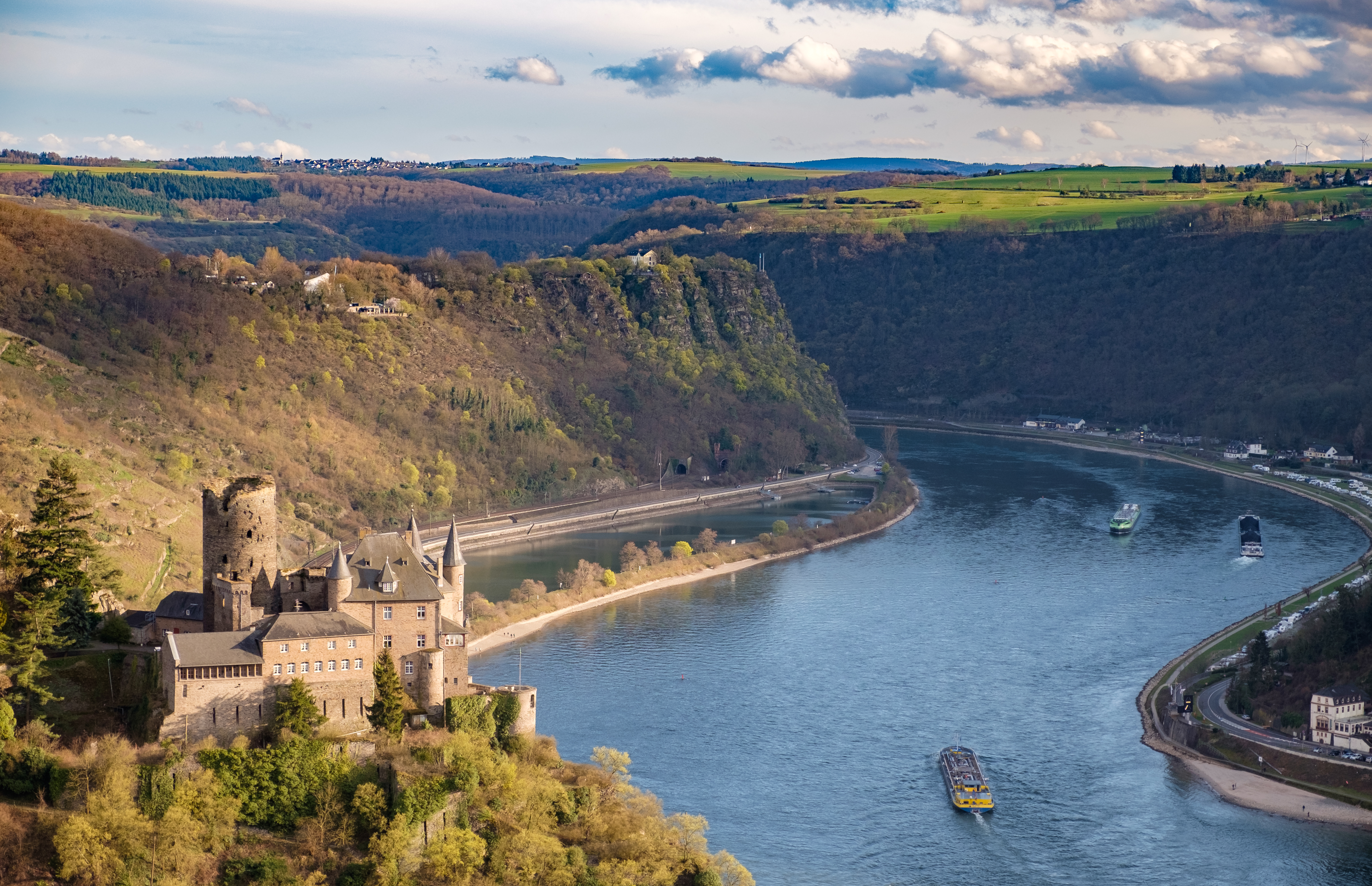
Upper Middle Rhine Valley is the 65 km (40 mi) southern section of the Middle Rhine between Koblenz and Rüdesheim in the states of Rhineland-Palatinate and Hesse in Germany. It was added to the UNESCO list of World Heritage Sites in June 2002 because of its beauty as a cultural landscape, its importance as a route of transport across Europe, and the unique adaptations of the buildings and terraces to the steep slopes of the gorge. The region's rocks were laid down in the Devonian period and are known as Rhenish Facies. This is a fossil-bearing sedimentary rock type consisting mainly of slate. The rocks underwent considerable folding during the Carboniferous period. The gorge was carved out during a much more recent uplift to leave the river contained within steep walls 200 m (660 ft) high, the most famous feature being the Loreley. The gorge produces its own microclimate and has acted as a corridor for species not otherwise found in the region. Its slopes have long been terraced for agriculture, in particular viticulture which has good conditions on south-facing slopes.
“Upper Middle Rhine Valley is the 65 km (40 mi) southern section of the Middle Rhine between Koblenz and Rüdesheim in the states of Rhineland-Palatinate and Hesse in Germany. It was added to the UNESCO list of World Heritage Sites in June 2002 because of its beauty as a cultural landscape, its importance as a route of t”
Live from here
Gallery
Nearby attractions
No other landmarks within a short walk from here.
Nearby restaurants, cafés & bars
Community reviews
On the map