Why visit
Why visit Bingen am Rhein
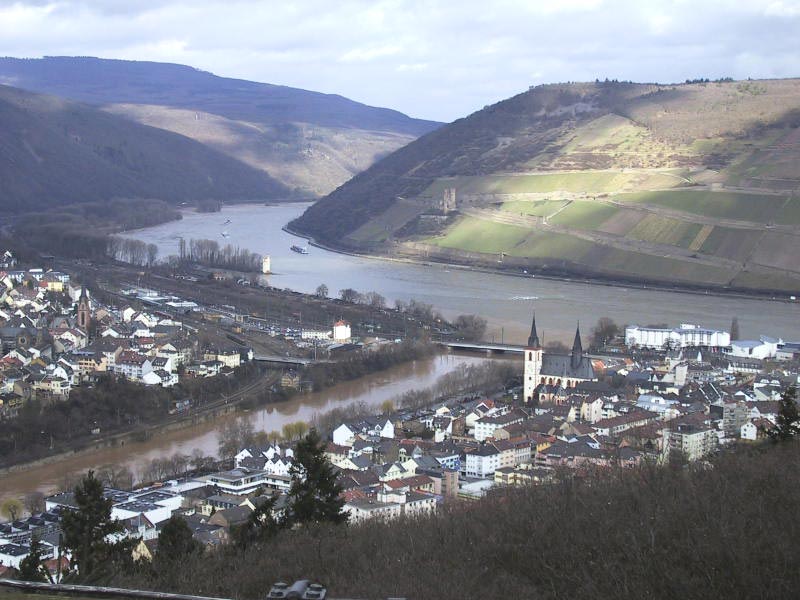
Bingen am Rhein is a town in the Mainz-Bingen district in Rhineland-Palatinate, Germany. The settlement's original name was Bingium, a Celtic word that may have meant "hole in the rock", a description of the shoal behind the Mouse Tower, known as the Binger Loch.
At a glance
Where
Mainz-Bingen, Germany
Category
Historic Site
History
Bingen am Rhein is a town in the Mainz-Bingen district in Rhineland-Palatinate, Germany. The settlement's original name was Bingium, a Celtic word that may have meant "hole in the rock", a description of the shoal behind the Mouse Tower, known as the Binger Loch. Bingen was the starting point for the Via Ausonia, a Roman military road that linked the town with Trier. Bingen is well known for, among other things, the legend about the Mouse Tower, in which Hatto II, the Archbishop of Mainz, was allegedly eaten by mice. Since the 19th century, the legend has increasingly been attributed to Hatto I, a predecessor of Hatto II. Saint Hildegard von Bingen, an important polymath, abbess, mystic and musician, one of the most influential medieval composers and one of the earliest Western composers whose music is widely preserved and performed, was born 40 km away from Bingen, in Bermersheim vor der Höhe. A new museum on the riverside is largely devoted to her and the romance of the Rhine Gorge. Bingen am Rhein was also the birthplace of the poet Stefan George, along with many other influential figures.
“Bingen am Rhein is a town in the Mainz-Bingen district in Rhineland-Palatinate, Germany. The settlement's original name was Bingium, a Celtic word that may have meant "hole in the rock", a description of the shoal behind the Mouse Tower, known as the Binger Loch.”
Live from here
Gallery
Nearby attractions
No other landmarks within a short walk from here.
Nearby restaurants, cafés & bars
Community reviews
On the map