Why visit
Why visit Czechoslovakia
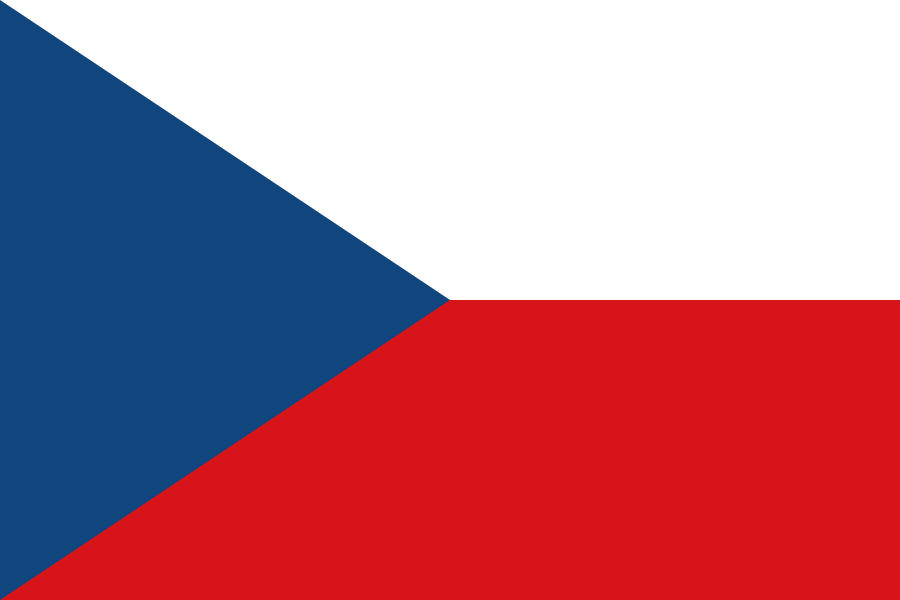
Czechoslovakia was a country in Central Europe. The country was bordered by Austria and Hungary to the south, Germany to the west and northwest, Poland to the northeast, and Ukraine to the southeast.
At a glance
Where
Charles Bridge, Czechia
Category
Historic Site
History
Czechoslovakia was a country in Central Europe. The country was bordered by Austria and Hungary to the south, Germany to the west and northwest, Poland to the northeast, and Ukraine to the southeast. Czechoslovakia had a hilly and mostly mountainous landscape that covered an area of 127,906 square kilometers (49,385 sq mi) with a mostly temperate continental and oceanic climate. The capital and largest city was Prague; other major cities and urban areas include Brno, Ostrava, Plzeň, Liberec, Bratislava and Košice. Championed by nationalists and first presidents Tomáš Masaryk and Edvard Beneš, Czechoslovakia declared independence in 1918 amid the dissolution of Austria-Hungary and had its sovereignty affirmed in the Treaty of Saint-Germain-en-Laye. In 1938, after the Munich Agreement, the Sudetenland became part of Nazi Germany. Between 1939 and 1945, the state ceased to exist, as Slovakia proclaimed its independence and Carpathian Ruthenia became part of Hungary, while the German Protectorate of Bohemia and Moravia was proclaimed in the remainder of the Czech Lands. In 1939, after the outbreak of World War II, Beneš formed a government-in-exile and sought recognition from the Allies.
“Czechoslovakia was a country in Central Europe. The country was bordered by Austria and Hungary to the south, Germany to the west and northwest, Poland to the northeast, and Ukraine to the southeast.”
Live from here
Gallery
Nearby attractions
No other landmarks within a short walk from here.
Nearby restaurants, cafés & bars
Community reviews
On the map